
— or, how convenience became a public health experiment, and who gets left holding the bottle
Let’s begin with an image. It is a Saturday evening in late June 2026. The Juhannus bonfires have burned down. The herring has been eaten. The holiday buzz is fading—but not quite gone. The phone rings. It is not a friend. It is a telemarketer, calling to sell magazine subscriptions.
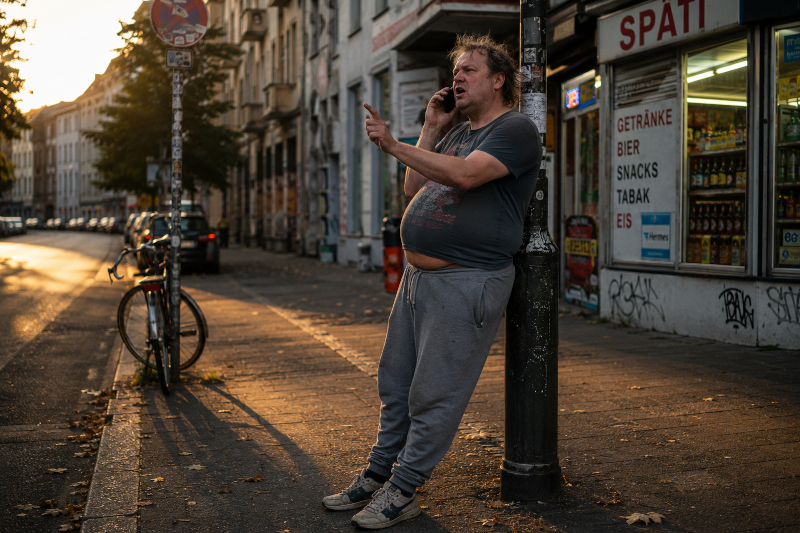
The consumer, slightly drunk and deeply irritated, projects an entire universe onto the stranger on the phone: the caller is intrusive, inappropriate, a loser who cannot afford a holiday. The consumer knows nothing about the caller. The caller could be anywhere in the world, speaking Finnish, working a gig. But the consumer projects their own anxiety, their own financial insecurity, their own fear of the returning ordinary—onto the voice on the line.
This is not a story about telemarketing. This is a story about what happens when we make things too easy to get—and too hard to refuse.
The Law That Arrived with the Summer
On 4 July 2026, a new alcohol law took effect in Finland. It had been passed by parliament on 23 June with 98 votes in favour and 77 against. The president had signed it. The summer was officially open—and so were the alcohol aisles.
The law does three things, all at once:
1. Extended Alko hours. For the first time, Alko stores may now be open every day of the year, from 9 AM to 9 PM, including Sundays and public holidays. Not all stores will open on Sundays—35 will, primarily in large shopping centres, with hours from 12 PM to 6 PM. A further 108 stores will extend their Saturday evening hours.
2. Home delivery of alcohol. Alko and licensed retailers may now deliver alcohol directly to customers’ homes. The delivery window is between 9 AM and 9 PM. The recipient must be present, prove their age, and—critically—must not be “vahvasti päihtynyt” (visibly intoxicated). There is a six-month transition period for licensing and training; actual deliveries are expected to begin in early 2027.
3. Cross-border online sales. Consumers may now order alcoholic beverages of up to 80% ABV online from other European Economic Area countries. This is where the tax revenue leaks out: according to tax authorities, an estimated 98% of online alcohol orders entering Finland go untaxed, costing the state up to €285 million annually.
The Paper Shield and the Empty Doorstep
On paper, the law has safeguards. The recipient must prove their age. The recipient must not be visibly intoxicated. The delivery worker must refuse if they are.
But paper safeguards are not the same as real ones.
Consider the delivery worker. They are alone, standing at a stranger’s doorstep. They have no colleagues, no security, no camera. They are the sole enforcement mechanism for a law that asks them to tell a drunk person—to their face—that they are too drunk to receive the alcohol they have already paid for.
The law does not provide them with a way to record the encounter. GDPR makes recording without consent almost impossible. The worker has no evidence if the customer denies being drunk. The worker has no backup if the situation escalates. And crucially, the worker gets paid for delivering—not for declining. Every refusal is a lost wage.
This is not a safety net. This is a trap.
PAM, the trade union for service sector workers, has expressed “extreme concern” about the safety risks of alcohol delivery. The law, they argue, was drafted without adequate consideration for the people who will have to enforce it.
The UK Precedent: What Happens When the Bottle Arrives at the Door
We do not have to guess what happens next. It has already happened in the United Kingdom.
In the UK, rapid alcohol delivery through apps like Deliveroo, Just Eat, and Uber Eats has become ubiquitous. One in five adults (22%, representing 12 million people) now order alcohol for rapid delivery at least once a week. Around 7 million people report ordering alcohol while already drunk.
And the consequences have been devastating.
Zoe Hughes was 35 when she died of alcoholism. Her family discovered, after her death, that she had been spending £1,000 to £1,500 a month on alcohol delivered through apps. In the months before her death, she was consuming five to seven bottles of wine, gin, or vodka daily. Her sister, Alexandria, has since campaigned for restrictions on alcohol delivery, arguing that the convenience of delivery apps accelerated Zoe’s addiction and made it invisible.
Zoe’s case is not unique. The charity Alcohol Change UK has launched an “End the delivery trap” campaign, citing rapid delivery as a “public health hazard” for people in recovery or with dependency issues. A parliamentary petition has called for a ban on alcohol delivery through apps, arguing that it makes alcohol “too easily available especially for people dealing with addiction”.
The UK government has acknowledged the concern: “We understand the concerns relating to rapid online alcohol delivery, which can lead to increased alcohol harm”.
The Finnish Blind Spot: Children, Families, and the Invisible Cost
In Finland, the concern is not hypothetical. EHYT, the Finnish Association for Substance Abuse Prevention, has issued a stark warning: the new law will increase alcohol availability and marketing at a time when preventive resources are being cut. The harms, they argue, will fall disproportionately on those already in vulnerable positions.
The numbers are sobering. Over 89,000 children in Finland live in a household where at least one parent has a severe substance abuse problem. Alcohol consumed at home increases the risk of domestic violence. And with home delivery, the alcohol arrives at the doorstep—no trip to the store, no cashier to notice the state of the customer, no natural pause to reconsider.
THL, the Finnish Institute for Health and Welfare, has reported that approximately three-quarters of all alcohol consumed in Finland is linked to risky use. The new law, critics argue, will only deepen that pattern.
EHYT’s director, Juha Mikkonen, put it bluntly: “The profits from alcohol sales flow abroad, but the harms and their costs remain in Finland”.
The Telemarketer’s Mirror: Who Is Really Seen?
Let us return, for a moment, to the telemarketer and the drunk consumer on the Saturday after Juhannus.
The consumer projects their anxiety onto the caller: you are intrusive, you are inappropriate, you are a loser. But the telemarketer has heard this before. They have heard it hundreds of times. They know that the consumer’s anger is not about the call—it is about the end of the holiday, the return to obligations, the anxiety of financial pressures, the fear of inadequacy.
The telemarketer is a mirror. And the consumer is lashing out at their own reflection.
The same dynamic applies to alcohol delivery. The convenience of the bottle at the door is not neutral. It removes the friction that might otherwise give a person pause—the walk to the shop, the cashier’s glance, the social judgment of buying another bottle. It makes addiction easier to hide, easier to sustain, easier to accelerate.
And the delivery worker, like the telemarketer, is left holding the projection. They are the face of the system, but they have no power to change it.
The Irony of the Law
The new alcohol law was sold as a modernization. It was sold as convenience, as freedom, as catching up with the rest of Europe. But the evidence from the UK suggests otherwise. The evidence from Finland’s own public health data suggests otherwise. The evidence from the workers who will have to enforce it suggests otherwise.
The law is not designed to get people drunk. But it is designed to make getting drunk easier. And when you remove the barriers to an addictive substance, you do not just serve the responsible consumer—you serve the vulnerable one, the isolated one, the one who is already struggling.
The profits flow abroad. The harms stay home.
Sources
Finnish Alcohol Law 2026
- Eduskunta (Parliament of Finland). “Eduskunta hyväksyi alkoholilain muutoksen äänin 98-77.” June 23, 2026.
- YLE. “Eduskunta hyväksyi muutokset alkoholilakiin – etämyynti sallitaan, Alkot voivat olla sunnuntaisin auki.” June 23, 2026.
- Suomenmaa. “Uusi alkoholilaki tulee voimaan ensi viikolla, Alkojen aukioloajat laajenevat.” June 26, 2026.
- Keski-Uusimaa. “Alko palvelee Järvenpäässä jatkossa myös sunnuntaisin – näin lakiuudistus näkyy paikallisesti.” June 23, 2026.
- Demokraatti. “Hallitus sai tahtonsa läpi viinalaissa – juomalähetit pääsevät matkaan.” June 23, 2026.
- Iltalehti. “Järjestöltä tyrmäys uudelle alkoholilaille: ‘Haitat jäävät Suomeen.’” June 23, 2026.
Delivery and Enforcement
- YLE. “Alkoholin kotiinkuljetus vapautuu – katso videolta, mitä mieltä Jyväskylässä ja Tampereella ollaan asiasta.” June 23, 2026.
- PAM (Palvelualojen ammattiliitto). “Uusi alkoholilaki tuo viinan kotiovelle, mutta unohtaa työntekijän turvallisuuden.” June 23, 2026.
- Suomenmaa. “PAM: Alkoholin kotiinkuljetus on merkittävä riski työntekijän turvallisuudelle.” September 25, 2025.
UK Precedent
- Daily Record. “Law may change after death of woman who spent £1,500 a month on alcohol delivery.” March 12, 2026.
- Mirror. “Woman, 35, died after ordering £1,500 a month of alcohol on delivery apps.” March 12, 2026.
- Fresh Balance. “Millions worried about rising harm as 1 in 5 adults order rapid alcohol deliveries weekly.” May 12, 2026.
- UK Parliament. Petition: “Stop delivery apps and shops delivering alcoholic drinks.” March 24, 2026.
- BBC. “‘My sister spent £1,000 a month on drink from food delivery apps.’” May 10, 2026.
Public Health and Vulnerable Groups
- EHYT (Ehkäisevä päihdetyö). “Alkoholin kotiinkuljetus ja etämyynti sallittiin – seuraukset osuvat etenkin haavoittuvassa asemassa oleviin.” June 23, 2026.
- Iltalehti. “Kommentti: Tiistaina hyväksyttiin laki, joka syventää monen lapsen helvettiä.” June 26, 2026.
- Lastensuojelun Keskusliitto. “Alkoholijuomien saatavuuden lisääminen kasvattaa riskiä alkoholin päätymisestä alaikäisten ulottuville.” March 9, 2026.
- THL (Terveyden ja hyvinvoinnin laitos). Report 6/2024, cited in Helsingin Sanomat opinion piece. June 25, 2026.
The robot recites. The lead shouts. The delivery worker knocks. The bottle is handed over.
We have been doing this since Ur. And we are not about to stop—unless we choose to.